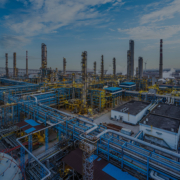
Securing the Backbone: The Converging Threat Landscape Facing Oil & Gas Operations

As geopolitical instability intensifies and regulatory frameworks evolve, energy sector operators face a threat environment in which physical and cyber vulnerabilities are no longer distinct disciplines — they are interconnected vectors demanding a unified response.

Few industries carry a more concentrated risk profile than oil and gas. Upstream extraction fields, midstream pipeline corridors, and downstream refining and export facilities each represent nodes of critical infrastructure whose disruption cascades rapidly across supply chains, economies, and national security architectures. For the security practitioner responsible for protecting these assets — and for the executives who sponsor them — the question is no longer whether these environments will be targeted. It is whether the organization will be positioned to detect, deter, and respond when they are.

A Single Attack Surface

The historical separation of physical security and cybersecurity into distinct organizational functions has become a structural liability. Modern oil and gas infrastructure is deeply instrumented. SCADA systems, distributed control systems, and programmable logic controllers govern everything from wellhead pressure and pipeline flow rates to refinery temperature thresholds — and these systems, once isolated, are increasingly networked. A credential compromised through a phishing campaign can, in environments with insufficient segmentation, become a pathway to an industrial control system. A physical intrusion at a remote compressor station may yield access to network hardware exploited days later from a different continent.

The threat actor does not distinguish between physical and cyber entry points. Neither should the security function responsible for countering them. The most consequential vulnerabilities in critical energy infrastructure rarely reside in a single domain — they are found in the seam between the two, where organizational silos create blind spots that sophisticated adversaries are well-prepared to exploit.

Geopolitical Risk As A Planning Assumption

The energy sector has always operated within a geopolitical context. What has changed is the directness with which that context now manifests as operational security risk. State-sponsored actors bring resources, patience, and discipline that criminal groups typically cannot match. Their campaigns — initial access, lateral movement, persistent implant installation — may unfold over months before any active exploitation occurs. Physical infrastructure presents an equally attractive target in periods of elevated tension: remote pipeline segments, unmanned metering stations, and offshore platforms offer high operational impact at relatively low cost of interdiction.

The rapidly evolving situation in Venezuela illustrates the point with precision. Following the U.S. military’s capture of former President Nicolás Maduro in early January and the subsequent push to reopen the country’s oil sector to foreign investment, American energy companies are now evaluating re-entry into a market holding the world’s largest proven crude reserves. That opportunity is real — and so is the security complexity that accompanies it. Infrastructure that has deteriorated significantly over the past decade, a volatile political transition still in early stages, and a region where the interests of multiple foreign powers intersect make Venezuela a concentrated example of what security planning in frontier energy environments actually requires. It is not a problem that resolves itself once a contract is signed.

Security programs that have not updated their threat models within the past 24 months — particularly those with exposure to international upstream or midstream assets — are operating on assumptions that no longer reflect the environment.

Regulatory Trajectory

The TSA’s pipeline security directives, first issued in 2021 and subsequently revised, established binding requirements around cybersecurity incident reporting, OT network segmentation, access controls, and incident response testing — a material departure from the previously advisory posture of federal pipeline security guidance. For operators with interdependencies to the bulk electric system, NERC CIP standards impose a parallel set of obligations. The regulatory trajectory is toward greater specificity and enforcement. Organizations that treat compliance as a minimum threshold rather than a foundation for genuine security maturity will find themselves revisiting the same ground with each successive directive update — at escalating cost and under increasing scrutiny from regulators, insurers, and capital partners.

An Integrated Posture

Effective response to this environment is not a product purchase — it is a structural commitment to integration. Physical security operations and cybersecurity functions that operate in organizational silos will consistently miss the indicators of compromise that cross domains. A fence intrusion at a remote facility, correlated with anomalous OT authentication activity at the same site, against the backdrop of active threat intelligence on a specific adversary group, is a materially different signal than any of those three data points in isolation. Building the capacity to generate that correlation — shared situational awareness, integrated platforms, analysts trained across both domains — is the work that defines security maturity in critical infrastructure. It is also, increasingly, what institutional capital and informed procurement officers expect to see demonstrated rather than described.
About SecurTec

SecurTec is a security firm delivering institutional-grade physical protection, cybersecurity, and strategic advisory services to government, critical infrastructure, and enterprise clients. Built as a unified platform, SecurTec addresses the full spectrum of security risk under a single, accountable structure — serving organizations where complexity is the baseline and institutional performance is the expectation.

SecurTec Awarded $4.3 Million Contract by the City of Miramar for Critical Infrastructure Security

Five-year engagement covers the protection of municipal water infrastructure and civic facilities across the City of Miramar, Florida.

West Palm Beach, FL — March 2026 — SecurTec today announced the award of a $4.3 million, five-year contract with the City of Miramar, Florida — to be fulfilled by SecurTec of Florida LLC, its Florida operating entity — for the provision of armed security services across the city’s critical municipal infrastructure and civic facilities. The engagement is effective March 2026.

Under the terms of the contract, SecurTec will deploy armed security personnel to protect the City of Miramar’s water treatment operations — essential infrastructure serving the public health and safety of the city’s residents — as well as its administrative centers and civic facilities, including City Hall. The scope reflects the municipality’s recognition that the protection of public infrastructure and government operations demands a security partner operating at an institutional standard.

The City of Miramar, with a population exceeding 140,000 and one of the fastest-growing municipalities in Broward County, administers a portfolio of public assets whose security posture carries direct consequences for service continuity and community confidence. SecurTec’s engagement positions the city with a security infrastructure commensurate with that responsibility.

“Contracts of this nature are awarded on the basis of trust, capability, and a demonstrated ability to perform in environments where the tolerance for error is low. We are honored by the City of Miramar’s confidence in SecurTec and committed to delivering the standard of protection their infrastructure and their residents deserve.” — Josh Veltri, Vice President of Business Development, SecurTec

The Miramar engagement reflects the broader mandate SecurTec was built to fulfill — the protection of the infrastructure, institutions, and operations that communities and organizations depend upon. The award is consistent with SecurTec’s focus on environments where security is not a peripheral function but a foundational one — where the protection of infrastructure, operations, and the people who depend on them carries institutional weight. It is that standard of consequence that defines the work SecurTec pursues.

About SecurTec

SecurTec is a security firm delivering institutional-grade physical protection, cybersecurity, and strategic advisory services to government, critical infrastructure, and enterprise clients. Built as a unified platform, SecurTec addresses the full spectrum of security risk under a single, accountable structure — serving organizations where complexity is the baseline and institutional performance is the expectation.

SecurTec Further Extends Corporate Platform Across Eleven Additional States

SecurTec has established its corporate structure across eleven additional states, extending the administrative foundation through which the firm is positioned to serve clients across a broadening national footprint.

WEST PALM BEACH, FL — December 2025 — SecurTec today announced the further extension of its corporate platform across eleven additional states, establishing the administrative and legal infrastructure through which the firm is positioned to serve clients in these markets. The states encompassed by this expansion include Texas, North Carolina, South Carolina, Alabama, West Virginia, Arkansas, Rhode Island, New York, Georgia, Michigan, and Louisiana.

The announcement builds on the corporate platform SecurTec established in 2024, extending that foundation into markets that reflect the firm’s continued assessment of where consequential security requirements are concentrated. The addition of Texas positions SecurTec within one of the most significant energy security markets in the country. The Carolinas, Georgia, and Alabama deepen the firm’s presence across the Southeast — a region whose port activity and expanding enterprise base represent meaningful demand across SecurTec’s service disciplines. The addition of New York and Rhode Island extends the platform into the Northeast, where government, financial services, and institutional clients represent a distinct and substantial market segment.

The extension of SecurTec’s corporate platform across these markets is consistent with the firm’s approach to growth — structured, deliberate, and built on the administrative foundation that consequential engagements require.

About SecurTec

SecurTec is a security firm delivering institutional-grade physical protection, cybersecurity, and strategic advisory services to government, critical infrastructure, and enterprise clients. Built as a unified platform, SecurTec addresses the full spectrum of security risk under a single, accountable structure — serving organizations where complexity is the baseline and institutional performance is the expectation.

SecurTec Awarded Emergency Security Contract by The Utility Board of the City of Key West for Critical Energy Infrastructure Protection

Multi-year agreement positions SecurTec as the security services provider for Keys Energy Services, the municipal electric utility serving the lower Florida Keys and its critical generation infrastructure.

WEST PALM BEACH, FL — July 2025 — SecurTec today announced the award of an emergency security services agreement with The Utility Board of the City of Key West, Florida, operator of Keys Energy Services — to be fulfilled by SecurTec of Florida LLC, its Florida operating entity. The agreement establishes SecurTec as a pre-qualified, FEMA-compliant security services provider on standby to deploy in support of Keys Energy Services’ critical generation and transmission infrastructure during declared emergency situations.

Keys Energy Services is the municipal electric utility supplying power to residents and businesses across the lower Florida Keys — a geographically isolated service territory extending from Key West through the Seven-Mile Bridge corridor in Monroe County. The utility’s generation infrastructure, including the Stock Island Generating Facility, operates within a maritime environment subject to the U.S. Coast Guard’s Maritime Security (MARSEC) threat level framework. Under the terms of the agreement, SecurTec is engaged to provide security services calibrated to MARSEC Levels 1, 2, and 3 — encompassing both stationary protection of critical access points and roving patrol operations across the facility perimeter.

The structure of the engagement reflects the nature of the operating environment. Energy infrastructure in the Florida Keys is exposed to a convergence of threat vectors: hurricane and severe weather events, maritime security threats, and the logistical complexity of operating at the southern terminus of a single-corridor geography with limited resupply options.

FEMA compliance requirements embedded in the agreement establish documentation, reporting, and operational standards consistent with federal disaster assistance frameworks. The award is consistent with SecurTec’s focus on engagements where the regulatory and operational bar is highest.

About SecurTec

SecurTec is a security firm delivering institutional-grade physical protection, cybersecurity, and strategic advisory services to government, critical infrastructure, and enterprise clients. Built as a unified platform, SecurTec addresses the full spectrum of security risk under a single, accountable structure — serving organizations where complexity is the baseline and institutional performance is the expectation.

Lessons Learned from the 2024 Hurricane Season

SecurTec’s response to Hurricanes Helene and Milton — spanning pre-storm positioning through sustained post-storm recovery operations — offers a framework for understanding what effective large-scale disaster security deployment actually requires.

The 2024 Atlantic hurricane season presented security demands of a scale and complexity that most firms are neither structured nor prepared to meet. Hurricanes Helene and Milton, arriving in close succession and affecting overlapping geographies across the Southeast, required not a reactive mobilization but a sustained, coordinated operational presence — one that began before landfall and extended across multiple months of recovery. SecurTec’s deployments in response to both storms offer a candid account of what that kind of engagement demands.

PRE-STORM POSITIONING

Effective disaster security does not begin when the storm makes landfall. It begins days earlier, when the threat trajectory is established and clients with critical assets — retail fuel infrastructure, commercial properties, distribution facilities — require security personnel already in position when conditions deteriorate. SecurTec deployed personnel ahead of both Helene and Milton, coordinating logistics to place teams at priority sites before road closures and evacuation orders constrained mobility. The operational lesson is straightforward: a security firm that mobilizes reactively, after the storm, arrives too late to protect the assets that matter most in the immediate aftermath.

OPERATIONAL SCOPE AND COMMAND STRUCTURE

SecurTec’s 2024 hurricane season operations were managed from two command centers — Orlando, Florida and Asheville, North Carolina — positioned to support deployments across the affected Southeast region. From these centers, SecurTec coordinated the deployment of security personnel across a range of operational environments: retail fuel stations managing surge demand and potential civil unrest, grocery and general retail facilities securing inventory against looting and vandalism, distribution points managing the provision of relief supplies to affected communities, commercial and private properties requiring continuous protection through the recovery phase, and logistics escort operations supporting the movement of assets and personnel through disrupted infrastructure corridors.

The dual command center structure proved essential. The geographic breadth of Helene and Milton’s combined impact meant that no single operations hub could maintain the situational awareness and response capacity the deployments required. Distributed command, with clear accountability and communication protocols between centers, allowed SecurTec to sustain operational continuity across a footprint that extended well beyond what a single-node structure could have managed.

COORDINATION WITH LAW ENFORCEMENT AND MUNICIPAL AGENCIES

Large-scale disaster deployments do not occur in isolation from the public safety infrastructure already operating in affected areas. SecurTec’s personnel worked alongside local law enforcement agencies and municipal authorities throughout the response — a relationship that requires establishment of trust, clear delineation of roles, and an understanding of the command hierarchies that govern emergency operations. Security firms that have not developed these relationships encounter friction at precisely the moments when coordination is most critical. SecurTec’s engagement with local agencies across its deployment footprint reflected the value of approaching government and law enforcement relationships as a standing operational priority.

WHAT SUSTAINED OPERATIONS REQUIRE

The duration of SecurTec’s 2024 hurricane season deployments — extending across multiple months for both storms — surfaced operational realities that shorter engagements do not. Personnel rotation, logistical resupply, client communication cadence, and the management of personnel welfare in austere post-storm environments all become materially more complex as engagements extend. The firms best equipped to sustain this kind of deployment are those that have invested in the operational infrastructure — scheduling systems, field management technology, experienced supervisory personnel — that makes sustained presence manageable rather than improvised.

The 2024 season reinforced a principle that SecurTec has built its platform around: that the security requirements which matter most are rarely the ones that can be addressed on short notice, with standard resources, in favorable conditions. They are the ones that arise in the most demanding environments, under the most time-compressed circumstances, and that demand a level of organizational readiness that either exists before the event or does not exist at all.

About SecurTec

SecurTec is a security firm delivering institutional-grade physical protection, cybersecurity, and strategic advisory services to government, critical infrastructure, and enterprise clients. Built as a unified platform, SecurTec addresses the full spectrum of security risk under a single, accountable structure — serving organizations where complexity is the baseline and institutional performance is the expectation.

SecurTec Extends Corporate Platform Across Ten States, Positioning Firm for Broad Market Engagement

SecurTec has established its corporate structure across ten states, building the administrative foundation through which the firm is positioned to serve clients across an expanding geographic footprint.

WEST PALM BEACH, FL — December 2024 — SecurTec today announced the formal extension of its corporate platform across ten states, establishing the administrative and legal infrastructure through which the firm is positioned to serve clients in these markets. The states encompassed by this expansion include Florida, Mississippi, South Dakota, Colorado, Idaho, Kansas, Kentucky, Missouri, Nebraska, and Wyoming.

The development reflects a deliberate and structured approach to market positioning — one consistent with how SecurTec has built its platform from the outset. Rather than pursuing opportunistic, contract-by-contract entry into new markets, SecurTec has established the corporate architecture necessary to operate with the same standard of accountability and consistency that defines its existing engagements. Each state represents a market in which the firm has identified meaningful demand across one or more of its service disciplines.

The geographic scope of this expansion reflects SecurTec’s assessment of where the most consequential security requirements are concentrated — from critical infrastructure and energy assets in the Mountain and Plains states to government and enterprise clients across the Southeast and Midwest.

The extension of SecurTec’s corporate platform across these markets is consistent with the firm’s approach to growth — structured, deliberate, and built on the administrative foundation that consequential engagements require.

About SecurTec

SecurTec is a security firm delivering institutional-grade physical protection, cybersecurity, and strategic advisory services to government, critical infrastructure, and enterprise clients. Built as a unified platform, SecurTec addresses the full spectrum of security risk under a single, accountable structure — serving organizations where complexity is the baseline and institutional performance is the expectation.